 Booking Handbook
By business
Mobile and home services
Offer appointments only when the address, service area, travel time, provider, job duration, route, and arrival window can coexist.
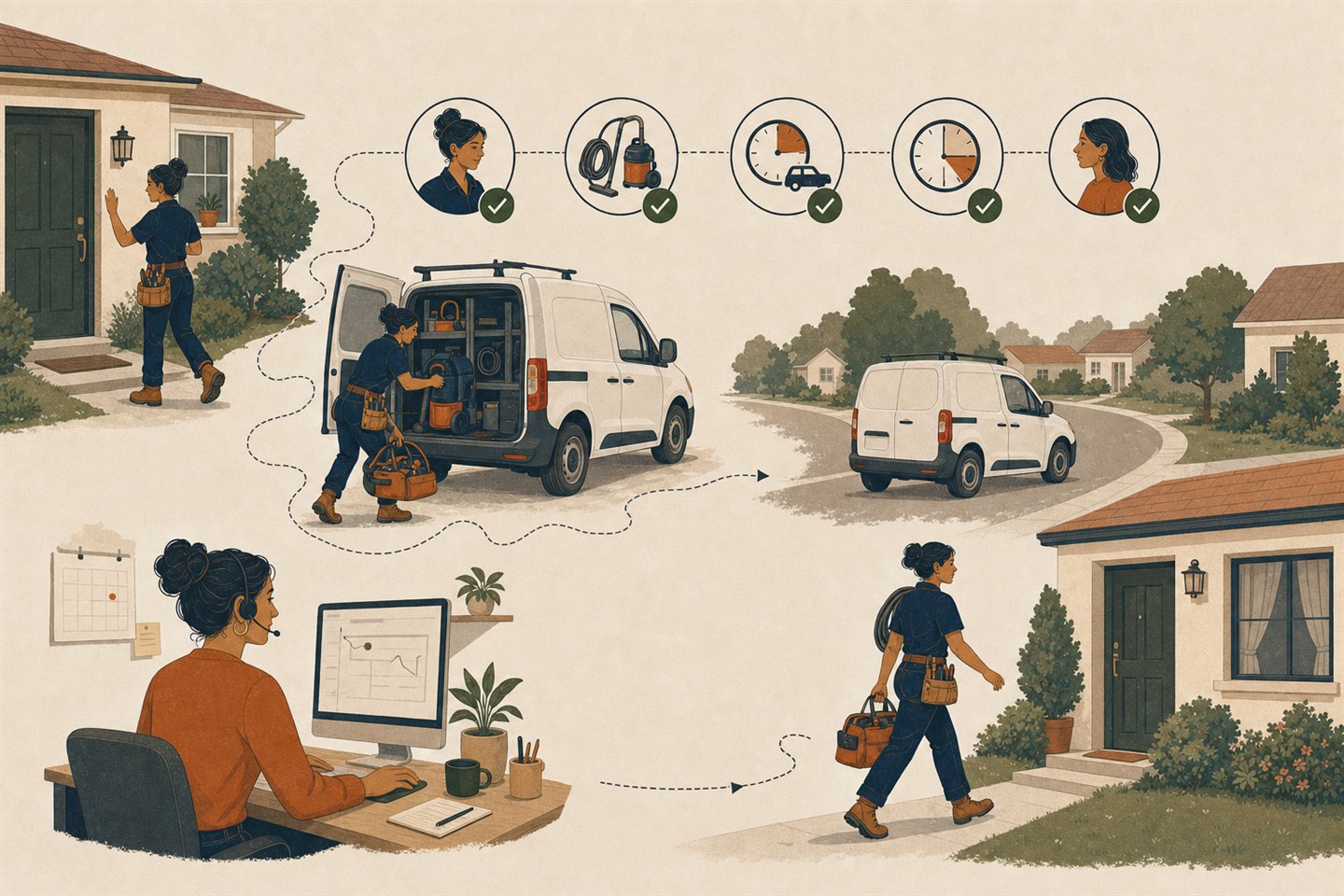
Follow the booking from request to recovery
Use one complete workflow so a change cannot silently leave a person, place, payment, or message behind.
- Collect and validate the customer address before showing final availability.
- Check service zone, provider eligibility, realistic job duration, travel, and route sequence.
- Reserve an arrival window rather than promising an impossible exact time when the workflow requires flexibility.
- Recalculate route, notification, estimate, and payment consequences after changes.
What the setup must handle
Must-haves
- Address and service-area validation
- Provider and service eligibility
- Travel-aware availability
- Job duration and arrival windows
- Mobile staff change/reschedule path
- On-site estimate and payment state
Deal-breakers
- Any postcode can book a service
- Travel time is a note instead of blocked availability
- Staff edits do not recalculate the customer promise
- Location fees or taxes are detached from the booking record
Check whether one customer-location appointment is actually feasible
Mobile and home-service workflows need one combined decision across address, area, service, worker, full travel-and-buffer time, fee state, material changes, and dependent views. The shared guide keeps each reusable calculation with its existing owner.
Open the full guide